One week you’re watching leaves turn copper and gold along the hillsides, and the next, a raw wind is cutting through Charleston, WV. That’s exactly when your water heater can break down. The sediment that spent all spring and summer quietly settling at the bottom of the tank is now making your morning shower lukewarm at best. Scheduling water heater maintenance in Charleston, WV, before temperatures fall is the difference between a hot shower and a rude awakening.
What Cold Temperatures Do to an Unserviced Water Heater
Most homeowners don’t think about their water heater until it stops working. But as Kanawha Valley temperatures dip, an unserviced tank has to work harder to maintain its set temperature. Sediment buildup, which accumulates faster in areas with hard water, acts as an insulating barrier between the burner and the water, forcing the heating element to run longer and burn more energy. According to the U.S. Department of Energy, sediment buildup can reduce water heater efficiency by up to 25%. That inefficiency hits your utility bill before it ever hits your comfort.
- Sediment buildup forces longer heating cycles, wasting energy.
- Hard water accelerates mineral deposits inside the tank.
- Reduced efficiency shows up on your bill before you notice it.
The Maintenance Steps That Protect Your System
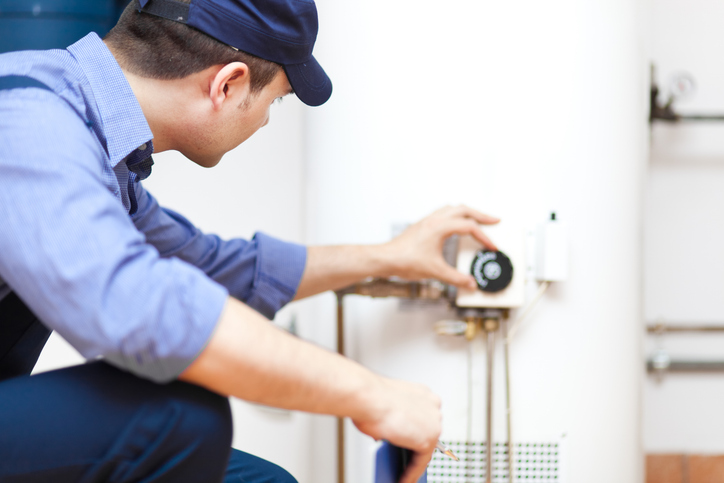
A thorough water heater tune-up goes well beyond draining the tank. During a professional visit, a service technician checks the anode rod, the sacrificial metal rod that prevents corrosion from destroying the tank from the inside out. Most homeowners have never seen one, but a depleted anode rod is one of the leading causes of early tank failure.
Service technicians also test the temperature and pressure relief valve, inspect the gas burner or heating elements and verify that the thermostat is calibrated correctly. These aren’t optional steps. They’re the difference between a water heater that lasts 12 years and one that fails at year seven.
- Anode rod inspection prevents internal tank corrosion.
- Pressure relief valve testing protects against dangerous pressure buildup.
- Thermostat calibration ensures consistent, efficient water temperatures.
Tank vs. Tankless: Maintenance Looks Different for Each
E.J. Thompson & Son LLC services both traditional tank water heaters and tankless systems throughout the Charleston area. Tankless water heaters, which heat water on demand rather than storing it, don’t deal with sediment the same way, but they’re not maintenance-free. Mineral scale can build up inside the heat exchanger, restricting flow and reducing output. Flushing a tankless system with a descaling solution annually keeps it running at peak capacity.
Tank units, on the other hand, benefit from a full flush, anode rod check, and burner inspection each year. Knowing which system you have and what it needs is where water heater maintenance in Charleston, WV, starts.
- Tankless systems need annual descaling to prevent heat exchanger buildup.
- Traditional tanks require flushing, rod checks, and burner inspections.
- Each system type has distinct maintenance needs — don’t treat them the same.
Schedule Water Heater Maintenance in Charleston, WV, Now
Ready to get ahead of the cold? Call E.J. Thompson & Son LLC to schedule water heater maintenance in Charleston, WV, today. Don’t wait until the water runs cold to make the call.
Image provided by iStock